
Why People Feel More Tired in the UAE Climate

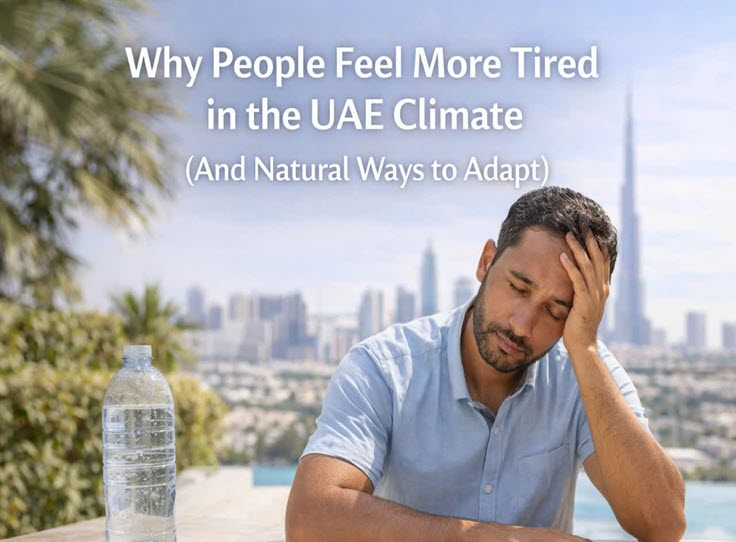
Why People Feel More Tired in the UAE Climate (And Natural Ways to Adapt)
Many residents notice an unusual drop in energy after moving to the UAE. Even people who sleep enough and eat well often feel tired during the day.
This is not laziness and it is not always a medical problem. In most cases, the climate itself changes how the body works.
High heat, humidity, indoor cooling, and lifestyle patterns together affect hydration, sleep quality, and daily energy levels. Understanding these factors helps you adapt naturally instead of constantly fighting fatigue.
The Body Works Harder in Hot Weather
The human body tries to maintain a stable internal temperature. In hot climates like the UAE, the body spends more energy on cooling itself. Sweat production increases and blood circulation shifts toward the skin surface.
As a result, energy that would normally support focus and activity is redirected toward temperature regulation. This is why people feel slower and less motivated during long warm periods.
Hidden Dehydration Is Very Common
Many people drink water only when they feel thirsty. However, thirst appears after dehydration has already started. In hot environments, the body loses fluids continuously through breathing and sweat.
Mild dehydration often causes:
- Head heaviness
- Low concentration
- Afternoon fatigue
- Muscle weakness
Because the loss happens gradually, people usually do not notice it. Instead, they assume they are simply tired.
Air Conditioning Changes Body Balance
Indoor cooling improves comfort but creates a sudden temperature contrast. The body repeatedly adjusts between outdoor heat and cold indoor air. This constant adaptation consumes energy and may increase fatigue.
In addition, very dry indoor air accelerates fluid loss through breathing and skin evaporation.
Why Sleep Feels Less Restful
Some residents sleep the same number of hours but wake up unrefreshed. Warm nights, artificial lighting, and late schedules can reduce deep sleep quality. The body cools slightly during healthy sleep cycles, and warm climates interfere with that natural process.
Therefore, the problem is not only sleep duration but sleep efficiency.
Natural Ways to Help the Body Adapt
1. Drink Before You Feel Thirst
Consistent hydration during the day supports circulation and temperature balance. Small and regular water intake works better than large amounts at once.
2. Add Minerals, Not Only Water
Sweat removes electrolytes as well as fluids. Balanced nutrition helps the body maintain energy stability in hot environments.
3. Adjust Activity Timing
Physical and mental tasks require more effort in peak heat hours. Morning and evening activity matches the body’s natural cooling rhythm.
4. Reduce Sudden Temperature Changes
Allow a short transition period when entering very cold indoor areas. Gradual adaptation reduces stress on circulation and muscles.
5. Support Restorative Sleep
A slightly cooler, darker sleeping environment improves recovery. Consistent sleep timing also helps the body synchronize with the climate.
When Adaptation Happens
Most people adapt within several weeks. Energy levels stabilize as the body improves heat regulation and hydration awareness. However, adaptation requires supportive habits. Without them, fatigue can persist for months.
Conclusion
Feeling tired in the UAE climate is a normal physiological response rather than a personal weakness. Heat, humidity, cooling systems, and hydration patterns all influence daily energy. By adjusting habits instead of resisting the environment, the body gradually restores balance and stamina.